
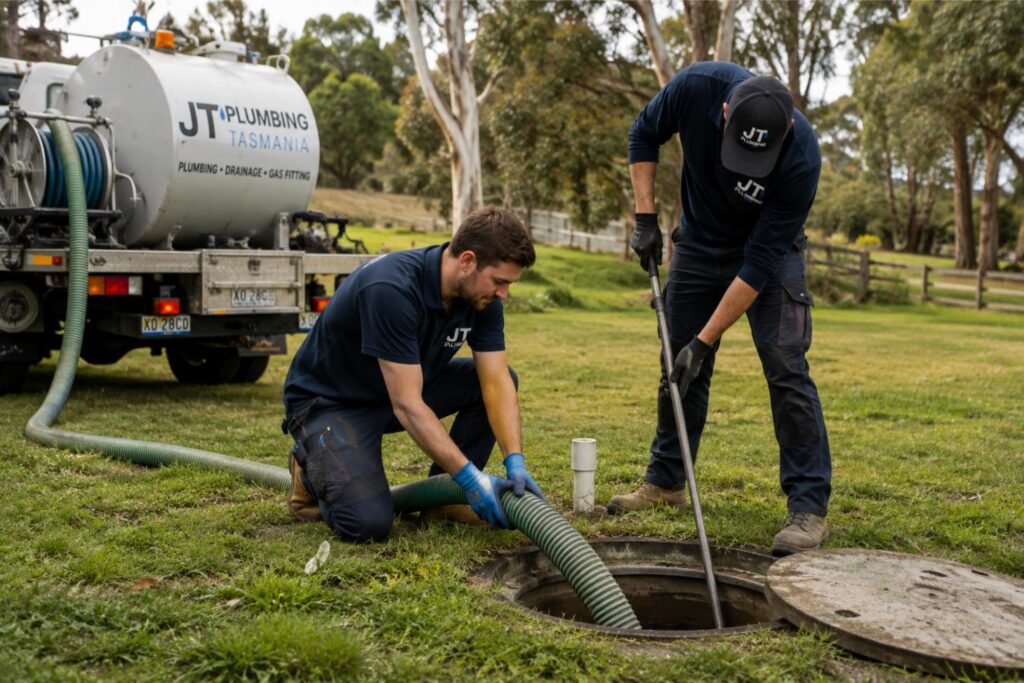
For many rural and semi-rural properties across the Huon Valley and Channel, a septic system is simply part of owning a home. Properties that aren’t connected to reticulated sewer, wastewater needs to be managed on the property. Tasmania’s Department of Health provides further information about on-site wastewater management and the responsibilities involved in safely managing wastewater.
The problem is that septic issues can develop gradually. A tank that hasn’t been pumped out, overloaded disposal areas, leaking fixtures or unsuitable products going down the drain can eventually lead to slow drainage, unpleasant smells, wastewater surfacing outside or costly repairs.
Regular septic tank maintenance helps reduce these risks and keeps the entire wastewater system working as intended.
How Does a Septic System Work?
A typical septic system collects wastewater from toilets, showers, sinks, the laundry and other household plumbing.
Wastewater enters the septic tank, where solids settle to the bottom as sludge while lighter materials form a layer near the surface. The liquid wastewater then moves to the next stage of the system, which may include absorption trenches, a disposal field or another form of on-site wastewater treatment.
The tank is only one part of the system. The condition of the pipework, treatment components and disposal area can be just as important.
For properties outside reticulated sewer areas, looking after the entire system is essential.
Why Septic Maintenance Matters on Rural Properties
A septic system has a limited capacity. It relies on the tank having enough room to separate wastewater effectively and the disposal area being able to absorb or treat the outgoing effluent.
Without appropriate maintenance, sludge and solids can build up inside the tank. If they are allowed to accumulate for too long, they can reduce the tank’s effective capacity and potentially move further into the system.
This can contribute to blockages and problems within the disposal area.
Maintenance is particularly important for rural properties where factors such as household size, seasonal occupancy, rainfall, soil conditions and water usage can vary considerably.
Rather than waiting for a noticeable failure, keeping track of your system and arranging maintenance when required can help identify potential problems earlier.
How Often Should a Septic Tank Be Pumped Out?
There isn’t one pump-out schedule that suits every property.
How often a septic tank needs desludging or pumping depends on factors including:
- Tank size and system type
- Number of people living at the property
- Household water usage
- Volume of solids entering the system
- Whether the property is occupied permanently or seasonally
- Previous maintenance and pump-out history
- Condition and performance of the overall wastewater system
As a general guide, conventional septic tanks are often inspected and pumped every few years, but the correct interval should be based on the individual system rather than relying solely on a fixed calendar.
If you have recently purchased a rural property and don’t know when the tank was last serviced, arranging an inspection can be a sensible starting point.
Keep records of inspections, servicing and pump-outs so you have a clear maintenance history for the property.
Signs Your Septic System May Need Attention
Septic problems don’t always begin with an obvious overflow. There may be smaller warning signs first.
Slow Drains
If several fixtures around the house are draining slowly, the problem may extend beyond an individual sink or shower. A blockage in the main drainage line or an issue with the septic system could be contributing.
Gurgling Toilets or Drains
Unusual gurgling sounds can indicate that wastewater or air isn’t moving through the drainage system normally. Persistent gurgling should be investigated rather than repeatedly treated with drain cleaners.
Unpleasant Odours
Strong sewage or wastewater smells around the tank, drains or disposal area can indicate a problem requiring attention.
Wet or Unusually Green Areas
Persistently wet, boggy or unusually lush patches around a disposal area can sometimes indicate that wastewater isn’t being absorbed or treated correctly.
This is particularly worth watching after prolonged wet weather, when already saturated ground can place additional pressure on some systems.
Wastewater Backing Up
Wastewater backing up through toilets, showers or floor drains requires prompt attention. Avoid continuing to use large amounts of water until the cause has been identified.
Common Septic Problems in the Huon Valley and Channel
Properties throughout southern Tasmania can have very different site conditions, so septic performance can vary even between neighbouring properties.
One issue worth considering is excess water entering the system or disposal area. Heavy rain and saturated ground can affect how effectively some disposal areas handle wastewater.
Surface water should be directed away from septic infrastructure wherever possible. Stormwater and roof drainage should not be intentionally connected to the septic system.
Tree and plant roots can also create problems. Roots naturally seek moisture and may enter damaged pipes or interfere with parts of the wastewater system.
Another common issue is too much water being used over a short period. Several loads of washing, long showers and other high-water-use activities occurring together can put additional demand on the system.
Spreading water use throughout the day can help reduce sudden loads.
What Shouldn’t Go Into a Septic System?
A simple rule is to be careful about what goes down toilets and drains.
Avoid flushing or pouring items such as:
- Wet wipes, including products labelled “flushable”
- Sanitary products
- Nappies
- Paper towel
- Cooking fats and oils
- Paint, solvents and harsh chemicals
- Large quantities of cleaning products
- Other non-biodegradable materials
These products can contribute to blockages, interfere with treatment processes or increase the amount of material accumulating inside the tank.
Your toilet should primarily be used for human waste and toilet paper.
In the kitchen, scrape food scraps into the bin rather than washing large amounts down the sink, and avoid pouring fats or cooking oils into the drainage system.
Simple Septic Maintenance Tips for Property Owners
You don’t need to constantly interfere with a properly functioning septic system. In fact, sensible everyday habits are often the most useful form of preventative maintenance.
Fix leaking taps and running toilets so unnecessary water isn’t continually entering the system. Spread washing loads across the week where practical rather than doing several high-water-use loads consecutively.
Know where your septic tank and disposal area are located, and avoid driving or parking heavy vehicles over septic infrastructure unless the area has specifically been designed for it.
Be careful when landscaping around the system as well. Deep-rooted trees and major excavation near tanks, pipes or disposal areas can create avoidable problems.
Most importantly, don’t ignore changes in how your drains or septic system behave.
Buying a Rural Property With a Septic System?
If you’re purchasing a home that isn’t connected to town sewer, it’s worth finding out as much as possible about the existing wastewater system.
Ask the seller or agent whether there are records showing the system type, installation details, previous servicing and the most recent pump-out.
Knowing what system you’re taking responsibility for can make future maintenance much easier.
It’s also useful to understand where the tank and disposal area are located before planning extensions, sheds, driveways, landscaping or other work around the property.
Septic Maintenance Is About the Whole System
Pumping the tank is important, but septic maintenance shouldn’t be viewed as a pump-out alone.
The tank, inlet and outlet pipework, household drains and wastewater disposal or treatment area all need to work together. A full tank may cause problems, but pumping it won’t necessarily solve an underlying issue such as damaged drainage, root intrusion or a struggling disposal area.
If you’re experiencing repeated septic problems, identifying the cause is more useful than continually treating the symptom.
Need Help With Your Septic System?
If you own an off-sewer property in the Huon Valley, Channel or surrounding areas, keeping your septic and drainage system maintained can help prevent inconvenient and potentially expensive problems.
JT Plumbing Tasmania can assist with septic tank installation, repairs, maintenance, inspections and associated drainage and plumbing work for rural and semi-rural properties.
Whether you’ve noticed slow drains, unusual odours or signs of a wastewater problem, or simply want to better understand the condition of an existing system, getting it checked early can help you determine the right next step.
Need septic tank assistance? Contact JT Plumbing Tasmania to discuss your property and arrange an inspection or service.