
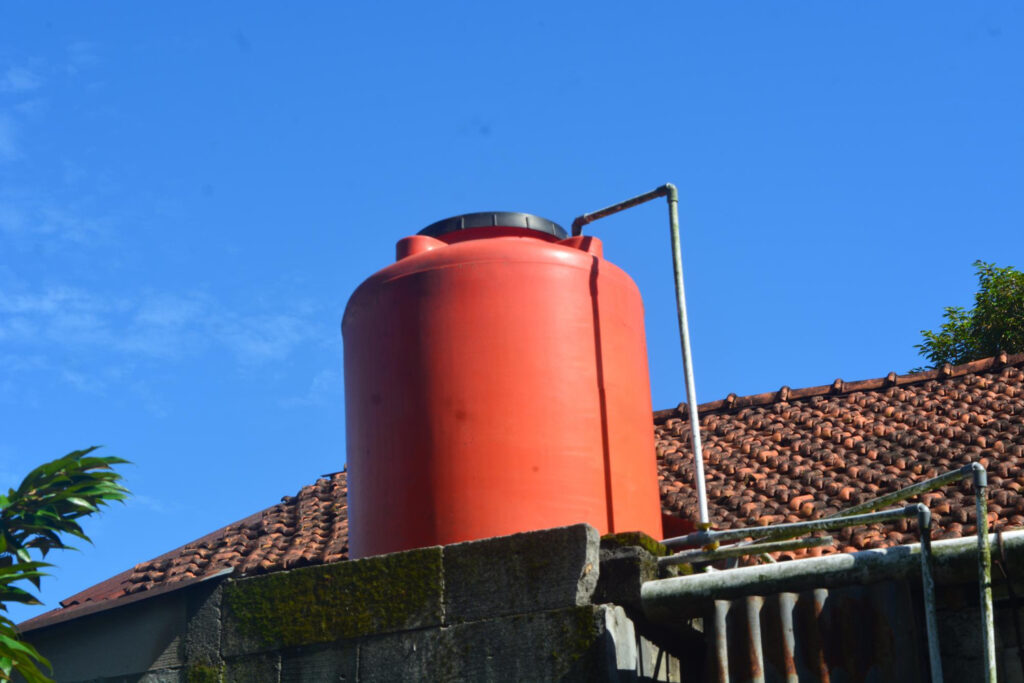
Living on a rural property often means taking greater responsibility for where your water comes from, how it’s stored and how it reaches the house.
For many homes, orchards, small farms and lifestyle properties across the Huon Valley, rainwater tanks are an important part of the water supply. Unlike a property connected solely to town water, a tank water system relies on several components working together — from roof catchments and tanks to pumps, filters and household pipework.
Understanding the plumbing side of your tank water system can help you maintain reliable water pressure, protect water quality and identify problems before you’re left without water.
How Does a Tank Water System Work?
A typical rainwater system starts with water collected from the roof. Gutters and downpipes direct this water towards one or more storage tanks.
From there, a pump usually supplies water to the house or other areas of the property. Depending on the setup, the system may also include filters, screens, first-flush devices, pressure controls, valves and additional treatment equipment.
On larger rural properties, things can become more complicated. There may be multiple tanks supplying different buildings, long pipe runs between the tank and house, separate irrigation supplies or a combination of rainwater and another water source.
The plumbing needs to suit how the property actually uses water rather than simply the size of the tank. JT Plumbing Tasmania can assist with general plumbing and maintenance where existing pipework, fixtures or water supply components need attention.
Tank Size Isn’t the Only Thing That Matters
When assessing a tank water setup, storage capacity tends to receive most of the attention. A large tank is useful, but capacity alone doesn’t guarantee a reliable household supply.
Your available water depends on factors such as:
- Roof catchment area
- Local rainfall and seasonal conditions
- Number of people using the water
- Household water consumption
- Irrigation and outdoor water requirements
- Tank condition and usable capacity
- Pump performance
- Pipe sizing and layout
- Leaks or water loss within the system
This becomes particularly important on orchard and rural properties where household water may be only one part of overall demand.
If irrigation, sheds, stock troughs or other uses share the same supply, it’s important to understand how much demand is being placed on the system.
Choosing the Right Water Pump
The pump is one of the most important plumbing components on a tank water property.
A pump that isn’t properly suited to the system may result in poor pressure, inconsistent flow or difficulty supplying fixtures located further away or uphill from the tank.
Choosing a pump involves more than selecting the largest model available. A plumber may need to consider the distance between the tank and house, elevation changes, pipe diameter, number of fixtures and expected simultaneous water use.
For example, a small home located close to its tank may have very different requirements from a farmhouse where water needs to travel a considerable distance or rise significantly in elevation.
The goal is consistent, practical pressure without unnecessarily oversizing the system.
Long Pipe Runs Can Affect Water Pressure
Distance matters on rural properties.
If a tank or pump is located a long way from the house, sheds or other fixtures, pressure losses can occur along the pipework. Elevation changes can add another challenge.
Incorrectly sized pipes can make these problems worse. A system may have a perfectly functional pump but still provide disappointing pressure because the pipework isn’t appropriate for the required distance and flow.
If you’re planning a new tank installation or extending water to another part of the property, it’s worth considering pipe sizing and pump requirements together rather than treating them as separate decisions.
Protecting Water Quality Starts Before the Tank
Water quality isn’t solely a filtration issue.
Keeping roof catchments, gutters and tank entry points in good condition can reduce the amount of leaves, sediment and other material entering the tank in the first place.
Screens and first-flush devices may form part of the system, while filtration or other treatment may be required depending on how the collected water will be used.
The Australian Government’s Guidance on the Use of Rainwater Tanks provides further information for households collecting and using rainwater, including considerations around system management and water quality.
For properties using tank water for drinking and food preparation, the Tasmanian Department of Health also provides information about drinking water quality and potential risks associated with private water supplies.
Don’t Forget About Tank Overflows and Stormwater
When tanks fill during periods of sustained rain, excess water needs somewhere suitable to go.
A poorly planned overflow can cause erosion, waterlogging or unwanted water around buildings and other infrastructure. On sloping rural blocks, uncontrolled discharge can also move a surprising amount of water downhill.
Tank overflow plumbing should direct excess water to an appropriate location and work with the property’s broader stormwater management.
It’s also worth periodically checking overflow pipes, screens and drainage points for blockages, particularly where leaves and other organic material are common.
For orchard properties surrounded by vegetation, keeping gutters, screens and stormwater components clear can be an ongoing part of property maintenance.
Common Tank Water Plumbing Problems
Tank water systems can develop problems even when there is still plenty of water in storage.
Pump Cycling On and Off
A pump that repeatedly starts and stops when no water is deliberately being used can indicate a leak, pressure issue or problem with the pump controls.
Small leaks shouldn’t be ignored on a tank water property. Unlike mains water, every litre lost is coming directly from your stored supply.
Low or Inconsistent Pressure
Low pressure can have several causes, including pump problems, blocked filters, restrictive pipework, long pipe runs or elevation differences.
If the problem has developed gradually, checking filters and the condition of the system may help identify the cause.
Air in the Plumbing
Spluttering taps or interruptions in flow can sometimes occur when air enters the system. This may happen when a tank runs very low, the pump loses prime or there is an issue somewhere on the suction side of the system.
Leaking Pipes and Fittings
Leaks are especially important to address quickly when your household depends on stored rainwater.
A leak that might seem minor can steadily reduce your available supply, potentially becoming a much bigger problem during dry periods. JT Plumbing Tasmania’s general plumbing and maintenance services can assist with investigating leaking pipes, faulty fixtures and other plumbing issues around the property.
Planning Water Supply for Orchards and Rural Properties
An orchard or acreage property may have water requirements that extend well beyond the house.
Before changing or expanding a system, consider which areas need water and whether they should all rely on the same supply.
For example, you might need water for the residence, workshop, sheds, garden, orchard or other outdoor areas. Trying to run everything from a single pump and pipe network without considering simultaneous demand can lead to poor performance.
Separating household and irrigation requirements may make sense in some situations.
Planning is particularly important when adding a new building, extending an orchard, installing additional tanks or relocating water storage.
What Happens During a Power Outage?
One difference between many tank water properties and mains-connected homes is their dependence on an electric pump.
If the power goes out, the pump generally won’t operate unless the property has an alternative power arrangement or a system specifically designed to maintain supply.
For rural households, particularly those accustomed to storm-related outages, it’s worth understanding what happens to your water system when electricity isn’t available.
Knowing where isolation valves and important components are located can also make troubleshooting and maintenance easier.
Buying a Property That Runs on Tank Water?
If you’re considering buying a rural home or orchard property, don’t just look at how many tanks are installed.
Find out how the water system actually works.
Identify which tanks supply the house, what the approximate storage capacity is, where the pump is located and whether filters or treatment equipment are installed. Check whether other buildings, gardens or irrigation systems share the household supply.
It’s also worth asking about previous plumbing problems, pump replacements and whether the tanks have been maintained.
Understanding the existing system gives you a much better picture of whether it suits the way you intend to use the property.
Planning Renovations or Adding Another Building?
Renovations can change water demand significantly.
Adding another bathroom, laundry, dwelling or accommodation area may increase both the volume of water being used and the number of fixtures operating simultaneously.
If you’re planning a substantial bathroom upgrade, consider the water supply at the same time as the layout and fixtures. JT Plumbing Tasmania provides bathroom renovation plumbing and can assess how the proposed changes interact with the property’s existing plumbing.
The same applies when connecting a new shed, workshop or other building located some distance from the main tank.
Planning the water supply early can help avoid discovering pressure or capacity problems after construction is complete.
Tank Water Plumbing Is About the Whole System
A reliable tank water supply depends on more than the tank itself.
Roof catchments, gutters, inlet screens, storage tanks, pumps, filters, valves, pressure controls, pipework, overflow drainage and household fixtures all play a role.
For rural properties, the distances between these components and the different ways water is used around the property make good system design particularly important.
Keeping an eye on pressure changes, leaks, pump behaviour and water consumption can also help identify developing problems before they interrupt your supply.
Need Help With Tank Water Plumbing?
JT Plumbing Tasmania assists homeowners and rural property owners with rainwater tanks, water pumps, tank plumbing connections, pipework, repairs and general plumbing maintenance.
Whether you’re upgrading an existing tank system, connecting additional storage, experiencing pressure problems or planning plumbing for a rural or orchard property, the system should be designed around the way you actually use water.
Need help with your tank water setup? Contact JT Plumbing Tasmania to discuss your property and plumbing requirements.